



Somalia Needs a New Political Reset
Somalia does not lack explanations for its crisis. It lacks a decision to move beyond it. The country’s future will not be shaped by further diagnosis, but by whether it is willing to pursue a genuine political reset grounded in reform, leadership, and inclusion.
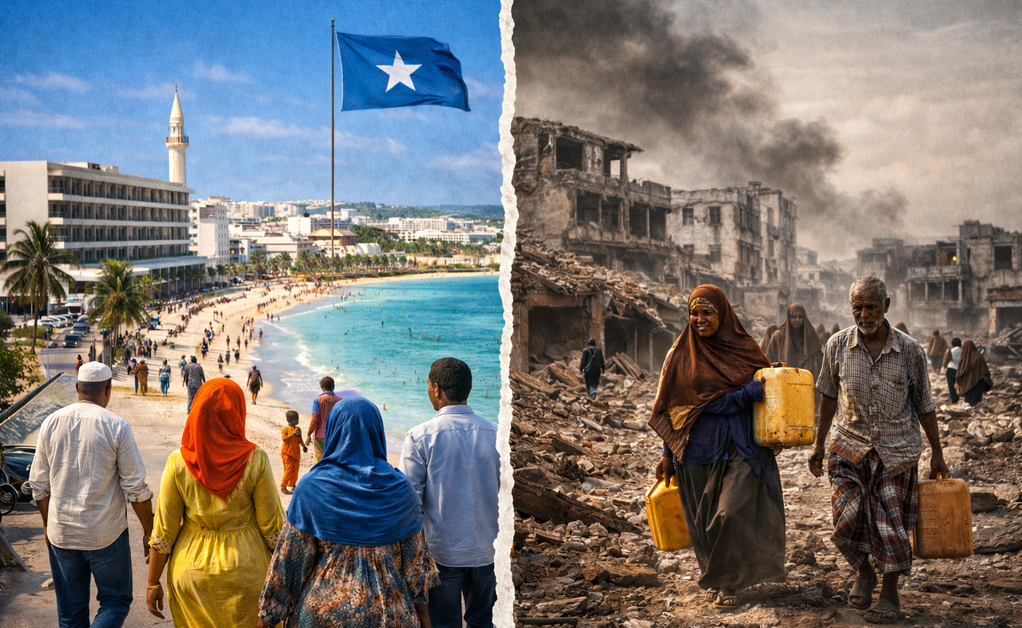
History matters here. Somalia has already demonstrated an extraordinary capacity for rapid transformation. After independence in 1960, the country moved quickly toward national cohesion. A shared language, strong collective identity, and public investment in education, healthcare, and state institutions produced momentum that few African states could match at the time. Within a short period, Somalia emerged as a regional actor with a functioning state and a capital widely known as the Pearl of Africa. That progress was not accidental. It was driven by political vision and national ambition.
That experience challenges the idea that Somalia’s stagnation is inevitable. It is not inevitable. It is the result of political choices.
Other countries emerging from war and collapse have shown that renewal is possible when political systems change course. Rwanda rebuilt state authority around national responsibility rather than factional loyalty. Liberia and Sierra Leone moved beyond civil war by reforming institutions and expanding political participation. These paths were neither simple nor perfect, but they shared one essential feature. Reform began when power stopped being negotiated for survival and started being exercised with accountability.
Somalia has yet to make that shift. Reform cannot come from managing the current system more efficiently. It requires a break with a political order that rewards access, money, and lineage over ideas, competence, and public service.
This is first and foremost a leadership question. Somalia is not short of politicians, but of leaders with vision. The country needs new political faces willing to articulate long-term goals, rebuild institutions, and think beyond clan arithmetic and transactional politics. Without leadership anchored in national ambition rather than personal survival, reform will remain rhetorical.
Somalia’s youth represent the majority of the population, yet remain largely excluded from political power. Women sustain economic and social life while remaining marginal in decision-making. The diaspora contributes billions in remittances but is denied meaningful political representation. A state cannot be rebuilt while most of its people remain spectators. Inclusion is not symbolic. It is structural.
The urgency of this moment is sharpened by what lies ahead. In 2026, Somalia is scheduled to hold parliamentary and presidential elections. Yet none of the conditions for democratic elections exist. There is no universal suffrage, no credible electoral infrastructure, and no political environment capable of guaranteeing fairness. Without fundamental reform, 2026 will once again become a clan-based selection process in which political positions are bought rather than earned. Another four years will be lost. Another generation will be asked to wait.
This outcome is not accidental. It is the result of political choice.
International partners must also reconsider their approach. Prioritizing stability over reform has produced stagnation, not progress. Supporting elections without democracy and institutions without accountability sustains the very system that blocks change. Somalia does not need symbolic processes or managed outcomes. It needs support for institutional reform, leadership development, and genuine political inclusion, even when that disrupts existing power structures.
Somalia’s future will not be determined by how long the current system survives, but by whether the country is willing to replace it. Renewal requires courage, reform, and leadership with ambition. The real question is no longer who is holding Somalia back. It is whether Somalia, and those who engage with it, are prepared to choose a different future rather than sacrifice yet another generation to a political order that no longer serves its people.