



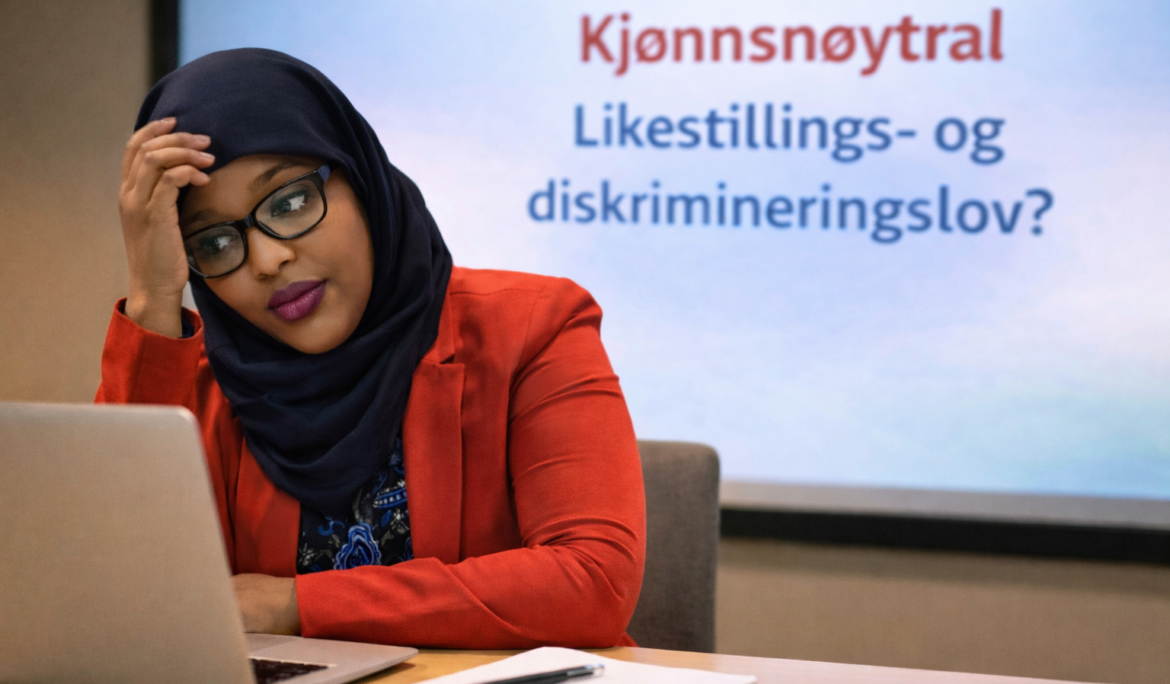
When Equality Law Becomes Gender-Neutral
I have followed the debate about making Norway’s Equality and Anti-Discrimination Act gender-neutral with a growing sense of concern. Each time the proposal is described as “modern” or “inclusive,” I find myself asking who is actually being included — and who quietly disappears in the process.
I have spent years working at the intersection of gender equality, integration, and public policy. What experience has taught me is this: laws are not written for ideal societies. They are written for the world as it is. And the world we live in is still shaped by unequal power, unequal access, and unequal risk.
Women continue to earn less, own less, and hold fewer positions of power. They are more exposed to violence and abuse, both in public and in private. These realities are often described as unfortunate leftovers from the past. They are not. They are produced and reproduced by systems that remain very much alive.
When language loses sight of power
For many minority women, inequality is layered. Gender discrimination does not exist in isolation from racism, class, or migration status. I have seen how these structures interact — in workplaces, in schools, and in encounters with public institutions. When equality is reduced to a question of individual choice, the role of those systems disappears from view.
Gender neutrality is often presented as fairness. But neutrality only works when everyone begins from the same place. That has never been the case. When the law stops naming women and minorities, it does not become more just. It becomes less honest about where inequality actually lives.
This is not an argument against addressing the real challenges faced by boys and men. Those issues matter deeply. But equality is not a competition where one group must lose visibility for another to gain support. We do not strengthen justice by erasing the legal recognition of those who remain structurally disadvantaged.
Equality law is more than legal language. It signals what a society is willing to see and take responsibility for. The day we no longer need to name inequality in law will be a remarkable one. But we will not reach that future by pretending it has already arrived.
This piece was originally published in Dagsavisen- Likestilling: Å fjerne kvinners plass i loven er et farlig tilbakeskritt